




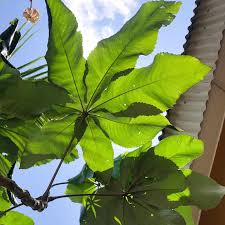
The *Myrianthus arboreus*, commonly known as the “Giant Yellow Mulberry” or “Monkey Fruit,” is a tree valued for its medicinal, nutritional, and practical applications, particularly in West and Central Africa. Locally, it’s sometimes called the “Veronica Comforter” due to its soothing medicinal properties. This plant grows well in humid, tropical regions and can reach considerable heights, producing large, lobed leaves and heart-shaped fruits.
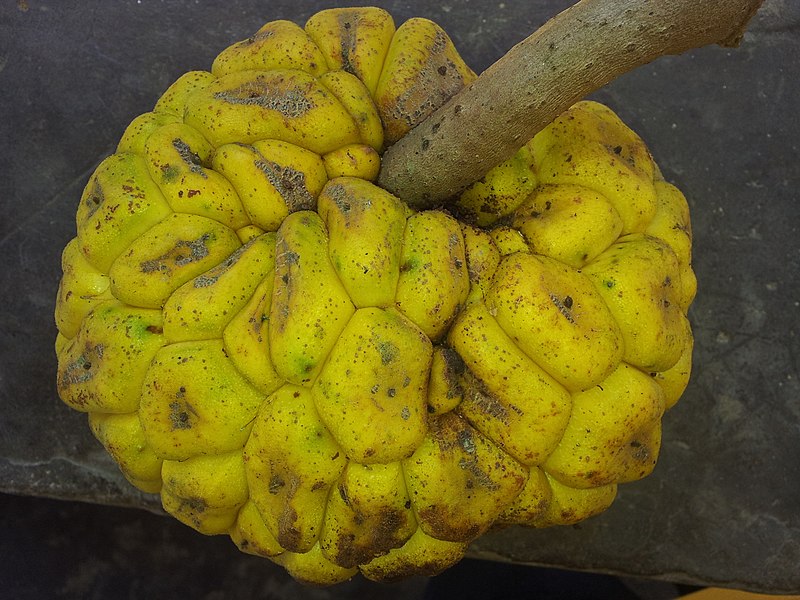
Myrianthus Arboreus Fruit
The fruit and leaves of *Myrianthus arboreus* are edible and rich in nutrients. The leaves are often used in traditional soups, while the fruits contain a sweet, pulpy interior that is enjoyed raw. Medicinally, the leaves, bark, and roots of this tree have been used to treat various ailments. For instance, sap from the leaves is applied to alleviate toothaches, chest congestion, and throat irritations, while the bark has properties believed to help with malaria and other infections. Some parts of the plant are also used to relieve muscular pains and headaches by making herbal preparations or topical applications.
Beyond its medicinal uses, *Myrianthus arboreus* is also used in agroforestry. Its large leaves provide ground cover, helping retain soil moisture and promoting humus formation. The plant also offers utility in creating natural fencing and fuel, while the ash can be used in soap-making. Its ecological and agricultural benefits make it an integral part of local environments and traditional medicinal practices.
Myrianthus Arboreus offers a range of benefits due to its nutritional, medicinal, and ecological properties. Here are some key advantages:
- Nutritional Benefits
– Leaves and Fruits: The young leaves are commonly used in soups, offering a significant nutritional boost, especially in regions with limited food diversity. The fruit, consumed raw, contains a sweet or tangy pulp that is rich in sugars, proteins, and oils, making it a valuable source of energy and nutrients. The seeds are particularly high in oil, containing essential fatty acids like linoleic acid, which is beneficial for heart health.
- Medicinal Uses
– *Myrianthus Arboreus* has a variety of medicinal applications in traditional medicine:
– Antimicrobial and Anti-inflammatory Properties: Extracts from the bark and roots are used to treat malaria, fevers, and other infections due to their antiplasmodial and antibacterial effects.
– Digestive Health: The bark and leaves are known to relieve digestive issues, such as diarrhea and dysentery, and can also help treat intestinal worms.
– Respiratory and Pain Relief: The sap from leaves is used to alleviate toothaches, chest congestion, and throat discomfort. Additionally, the tree has analgesic properties, often used for muscular pain relief.
- Ecological and Agricultural Benefits
– Soil Enrichment: The large, lobed leaves provide excellent ground cover, helping retain soil moisture and contributing to organic matter when decomposed. The tree is also known to support soil health through mycorrhizal associations, which aid in nitrogen enrichment.
– Agroforestry: *Myrianthus arboreus* is used in agroforestry as it grows quickly and provides a substantial canopy. It can act as a windbreak, and its branches and leaves contribute to soil fertility, making it valuable in sustainable farming practices.
- Practical Uses
– Soap Production and Fuel: The wood’s ash is sometimes used in traditional soap-making, and the tree itself serves as a sustainable source of fuel for communities.
– Wood for Utensils and Fencing: The fibrous, lightweight wood is used for making utensils and natural fencing, adding to its versatility in daily life applications.
In summary, *Myrianthus arboreus* is not only a source of nourishment but also serves as a traditional remedy, ecological enhancer, and practical resource, especially valuable in tropical regions where it naturally thrives.
